Practical advice for midlife returners and career changers
Returning to work or changing career can make updating your LinkedIn profile feel more complicated than it should. How do you explain a career break? What belongs in your headline? Which skills should you include? And how can you make your profile stand out without sounding like everyone else?
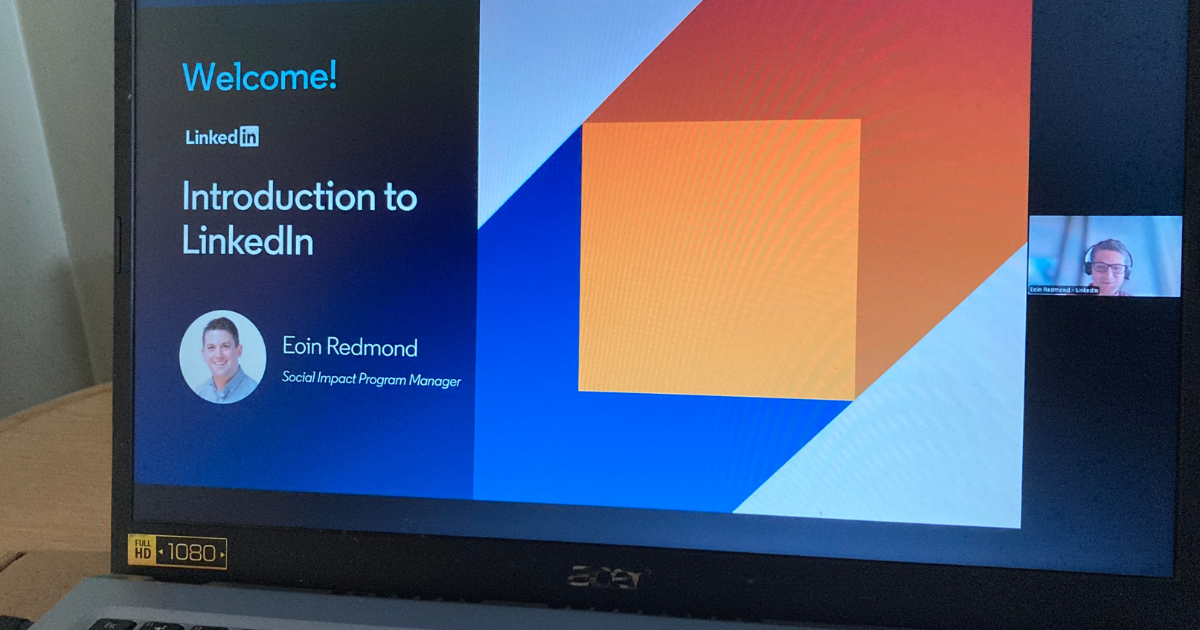
These were some of the questions explored during our recent Back To Work Connect community workshop, hosted by Gina Oglesby and led by Eoin Redmond, Social Impact Program Manager at LinkedIn.
The session was packed with practical advice, but one message stood out: your LinkedIn profile does not need to present a perfectly linear career. It should give an honest, confident and easy-to-understand picture of who you are, what you can offer and where you would like to go next.
Your LinkedIn profile is more than an online CV
A CV is usually adapted for a particular role and submitted directly to an employer. Your LinkedIn profile has a different job to do. It is a living professional profile that can help recruiters and employers discover you—even before you apply.
Recruiters search LinkedIn using job titles, experience, skills and keywords. A complete, clearly written profile can therefore improve your chances of appearing in relevant searches.
Your profile should help someone quickly understand:
- who you are professionally
- the experience and skills you bring
- what you have achieved and
- the type of opportunity you are seeking.
It should not simply repeat your CV word for word. It can show more of your personality, explain the story behind your career and develop over time as your goals change.
Start with a clear, professional first impression
Your photograph and headline are among the first things people notice.
Use a recent, clear profile photograph that looks professional and approachable. You do not need a formal corporate headshot, but the photograph should show you clearly and feel appropriate for the type of work you want to pursue.
LinkedIn also allows you to add an audio recording showing people how to pronounce your name. This small detail can help create a more personal connection and make it easier for someone to address you confidently.
Your headline should be concise and relevant. Rather than using only a label such as “Seeking opportunities,” use the available space to communicate your professional identity and value.
For example:
Operations and Customer Service Professional | Experienced in Team Coordination, Problem-Solving and Client Support
Think about the words a recruiter might use when searching for someone with your experience. The strongest headline combines your target area with a few genuine strengths or specialist skills.
Make your About section sound like you
Your About section is your short professional introduction—similar to the answer you might give if someone asked, “Tell me about yourself.”
Aim for a focused opening of approximately 40 words that explains your experience, strengths and next step. You can add more detail underneath, but the most important message should appear first.
Include:
- your professional background
- two or three strengths or areas of expertise
- the value you can bring to an organisation and
- the type of role or sector you are exploring.
AI tools can help you gather ideas or improve the structure, but they should not remove your own voice. Generic wording and overused phrases can make profiles sound very similar. Employers want to understand the person behind the profile, so edit any suggested content until it feels natural and true to you.
Ask someone who knows you well to read the section. If it does not sound like something you would say, revise it.
Do not hide a non-linear career
Many returners worry that their career path looks “squiggly” rather than straightforward. You may have changed sectors, taken time out to care for family, worked part-time, volunteered, studied or pursued a completely different direction.
That does not make your experience less valuable.
Employers are increasingly familiar with non-linear careers. Rather than trying to disguise changes or gaps, help the reader understand them. A short narrative can explain why you moved in a new direction and how your experience connects.
For each position, begin with one or two sentences that provide context, followed by bullet points highlighting your responsibilities, achievements and skills. This makes your experience easier for both people and recruitment technology to understand.
Focus on what you contributed, learned or achieved. Where possible, include evidence—such as improving a process, supporting a team, managing competing priorities, increasing customer satisfaction or completing a project.
Include your career break
A career break does not need to be an empty space on your profile. LinkedIn allows you to add career breaks and explain the reason for your time away from paid employment.
Keep the description clear and confident. Depending on your circumstances, you may also want to include relevant activities such as:
- caring responsibilities
- volunteering or community involvement
- training and professional development
- freelance, project or family-business work
- committee or board participation and
- skills developed or strengthened during the break.
The aim is not to justify every month away from work. It is to give helpful context and show that your career story continued, even if it did not follow a traditional route.
Be accurate and selective with your skills
The skills section improves your profile’s searchability, but more is not always better. Include skills that are relevant to the work you want and that you could confidently discuss in an interview.
A useful test is to ask:
“Could I give a clear example of using this skill?”
If the answer is no, reconsider whether it belongs on your profile. Employers may expect you to demonstrate or verify the skills you list.
Review job descriptions for the type of role you want. Notice which skills appear regularly and identify the ones you genuinely possess. You may have developed valuable transferable skills through paid employment, caregiving, volunteering, education or other life experience. What matters is that you can connect each skill to credible evidence.
Build a meaningful network
LinkedIn is not a numbers competition. A smaller, relevant network can be more valuable than hundreds of connections you do not know.
Be thoughtful about the people you invite into your network. Former colleagues, classmates, course participants, professional contacts, event speakers and people you meet through your sector are all useful starting points.
When sending a connection request, add a short personal note explaining where you met or why you would like to connect. This makes the request warmer and more memorable.
Your network becomes more useful when you engage with it. Try to use LinkedIn at least once a week. You do not have to create original posts every time. You can:
- leave a thoughtful comment on someone else’s post
- share a useful article and add your perspective
- congratulate a contact on an achievement
- follow organisations you would like to work for or
- contribute to conversations connected to your area of expertise
Consistent, genuine activity helps people become familiar with you and your professional interests.
Let recruiters know you are open to opportunities
If you are actively looking for work, consider switching on LinkedIn’s Open to Work feature. You can select the types of roles and locations that interest you and choose whether this information is visible to all LinkedIn members or primarily to recruiters.
Keep your preferences focused. Being clear about the roles you want makes it easier for recruiters to understand where you may fit.
Eoin also recommended completing LinkedIn’s profile verification process, where available. Verification can provide an additional signal that your profile is genuine—something that is becoming increasingly valuable as AI-generated and false profiles become more common.
Keep your wider online presence consistent
Your professional brand is not limited to LinkedIn. Employers may look at other public information connected to your name, so it is worth reviewing your privacy settings and checking what appears in a simple online search.
You do not need to remove every sign of your personality. The goal is to ensure that publicly visible content does not conflict with the professional impression you want to create.
Your profile does not need to be perfect before you begin
The most effective LinkedIn profiles are not completed once and forgotten. They evolve as you gain experience, develop new skills and become clearer about your next step.
Start with the sections that matter most:
✔️Add a clear profile photograph.
✔️Strengthen your headline.
✔️Write a short, authentic About section.
✔️Update your experience and explain any career break.
✔️Choose relevant skills you can support with examples.
✔️Begin engaging with your network once a week.
For returners and career changers, LinkedIn offers an opportunity to bring together the full story of your working life—not only your most recent job title. Your path may not be linear, but it has given you experience, perspective and skills that can be extremely valuable to the right employer.
The key is to present that story honestly, clearly and with confidence.
Back To Work Connect would like to thank Eoin Redmond for sharing his expertise and practical guidance, and everyone from our Returner Community who joined the workshop and contributed their questions.
If you are preparing to return to work or explore a new career direction, visit the Back To Work Connect Career Hub for further resources, events and returner-friendly opportunities.
To explore Returner-friendly jobs, events, training, and support, visit Back To Work Connect
Sign up to our newsletter & job alert today and never miss the ideal opportunity again ! Sign up HERE