Finding the connection between your skills and what employers need
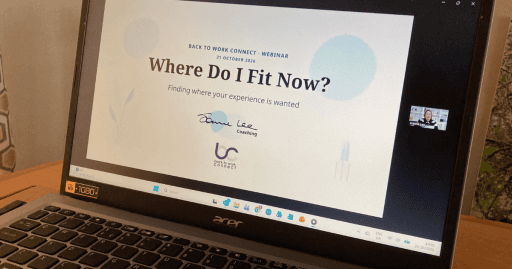
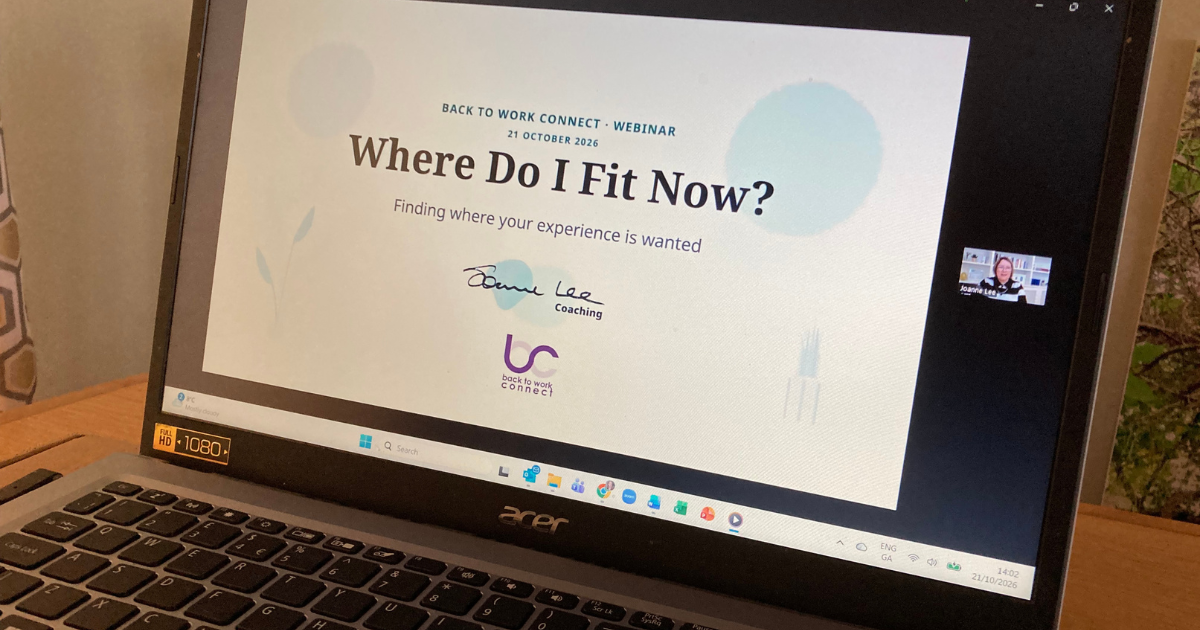
At our recent Back To Work Connect community event, “Where do I fit now?”, career consultant Joanne Lee of Joanne Lee Consulting helped us explore a practical way forward: understanding where your interests and experience meet what employers need.
The session centred on three questions:
👉What energises you?
👉What are you good at?
👉What is the market looking for?
Finding the overlap can help you make more informed decisions about your next step.
Start with curiosity, before committing to a course
When you feel uncertain about your career, signing up for a course can feel like a positive move. It offers structure, a sense of progress and something new to put on your CV.
But before investing your time, energy and money, it helps to ask: what opportunities could this learning help me access?
Following an interest is valuable. Understanding whether employers need those skills helps you turn that interest into a realistic career plan.
You may discover that you need a particular qualification. You may find that a short refresher would be enough. Or you may realise that you already have much of what employers are looking for, but need help recognising and explaining it.
The aim is to give your learning a clear purpose.
Become a job description detective
One of Joanne’s most useful suggestions was to approach job advertisements as a source of information, before deciding whether to apply.
Choose three to five advertisements for roles that interest you. Read beyond the job titles and look for clues:
- Which skills appear repeatedly?
- What would the person actually spend their day doing?
- Which requirements are essential, and which are described as desirable?
- What problems does the employer need this person to solve?
- Which tasks appeal to you, and which would you rather avoid?
During the session, Joanne explored a business administrator advertisement, drawing attention to requirements such as organisation, customer focus, accuracy and the ability to learn quickly.
This helps shift the question from “Have I held this exact job title?” to “Where have I demonstrated the skills this work requires?”
It also helps you spot patterns. If several roles mention maintaining accurate records, coordinating activities and communicating with customers, you have a clearer picture of the evidence to include in your application.
Give yourself a fair assessment
A long list of requirements can make it very easy to rule yourself out.
However, wording matters. Experience described as “an advantage, but not essential” should be assessed differently from a mandatory qualification or professional registration.
You do not need to assume that every unfamiliar task makes you unsuitable. Equally, it is useful to recognise where a genuine gap needs attention.
Try sorting the requirements into three groups:
I can demonstrate this already.
- I have related experience that could transfer.
- I would need training or further experience.
This gives you something more useful than a quick yes or no: a realistic picture of your fit and what you might need next.
If the advertisement leaves important questions unanswered about hours, location, flexibility or duties, seek clarification where possible. An unclear job description can make it harder to assess a role.
Your experience deserves a closer look
Joanne also encouraged attendees to think beyond their most recent paid role.
Previous employment, volunteering, community involvement, caring responsibilities and other experiences may provide examples of skills relevant to work.
For example:
- Experience
- Skills it may help demonstrate
- Helping organise a community event
- Planning, teamwork and communication
- Coordinating appointments and services for a family member
- Organisation, record keeping and liaising with others
- Managing a renovation
- Budgeting, scheduling and resolving problems
- Learning a new digital tool
- Willingness to learn and practical problem-solving
The detail matters. These activities do not automatically establish a professional qualification or specialist expertise, but they can provide useful evidence of particular skills.
Ask yourself: what did I personally do, how did I approach it, and what happened as a result?
You can draw on earlier career achievements too. A career break does not erase that experience. Consider which examples remain relevant and how you can demonstrate your current knowledge.
Build a bank of examples
It is much easier to tailor a CV or prepare for an interview when you already have examples to work with.
Joanne suggested creating a simple spreadsheet with three columns:
- Competency or skill
- Brain dump of examples
- A clear STAR story
- Organisation
- Times you managed deadlines, records or competing priorities
- One example explaining the situation, task, action and result
- Communication
- Times you explained information, resolved confusion or supported someone
- A specific example showing what you did and its outcome
- Problem-solving
- Times something went wrong and you found a way forward
- A concise account of the problem, your response and the result
- Start with rough notes. You do not need polished answers immediately.
Then use the STAR method to structure your strongest examples:
Situation: What was happening?
Task: What needed to be done?
Action: What did you personally do?
Result: What was the outcome?
A result does not always need a percentage or financial figure. It might be a deadline met, an issue resolved or a process made easier. Keep it specific and accurate.
Talk to people who can help you understand the work
Job advertisements offer one view of the market. Conversations can help fill in the gaps.
Joanne encouraged attendees to think about people who know a sector, understand a role, have made a similar transition or could introduce them to someone useful.
You do not have to begin by asking for a job. Start with a question:
“I’m exploring a move into this area and would really value your perspective. What does the work involve, and which skills make the biggest difference?”
Other useful questions include:
What has changed in this type of work?
Which qualifications are necessary?
What routes do people take into the role?
What would you suggest I investigate before choosing a course?
Aim for one useful conversation a week. Keep a short record of what you learn and any suggested next steps. Over time, those conversations can help you narrow your options and test your assumptions.
Use the employer’s language to explain your experience
Once you understand the skills a role requires, make the connection clear in your CV, LinkedIn profile and application.
If an employer asks for coordination, customer communication or accurate record keeping, explain where you have done those things, using relevant examples.
This means choosing clear, familiar wording that helps the reader understand your experience. Copying keywords without supporting evidence will not tell your story.
Keep your CV easy to navigate, with clear headings, straightforward formatting and attention to the application instructions.
Human skills still matter
Technology featured in our discussion, but so did the value of human skills.
The World Economic Forum’s Future of Jobs Report 2025 identifies analytical thinking, resilience, leadership and creative thinking among employers’ core skills, alongside empathy, active listening and lifelong learning.
For Returners and career changers, this is a useful prompt to look carefully at the experience you already bring, while identifying any technical or professional learning your chosen direction requires.
Your next step: gather evidence
You do not need to work out your entire future this week. Start with a small investigation:
👉Find three to five job advertisements that interest you.
👉Highlight the skills and requirements that keep appearing.
👉Write down examples of where you have demonstrated them.
👉Identify any gaps you need to explore.
👉Arrange one conversation with someone who knows the work.
Then revisit those three questions: what energises me, what am I good at, and what is the market looking for?
Your answers may become clearer once you have real information in front of you.
If you would like support deciding where to begin, explore our Personalised Back to Work Roadmap for resources to help you take your next step.
Thank you to Joanne Lee of Joanne Lee Consulting, and to everyone who joined the session and contributed their questions and experiences.
Keep up to date with the latest Returner Friendly employers, upskilling & retraining opportunities by joining our platform HERE
Sign up to our newsletter & job alert today and never miss the ideal opportunity again! Sign up HERE