

“I Worked for the Same Employer for 35 Years. Will Employers Think I’m Not Used to Change?”
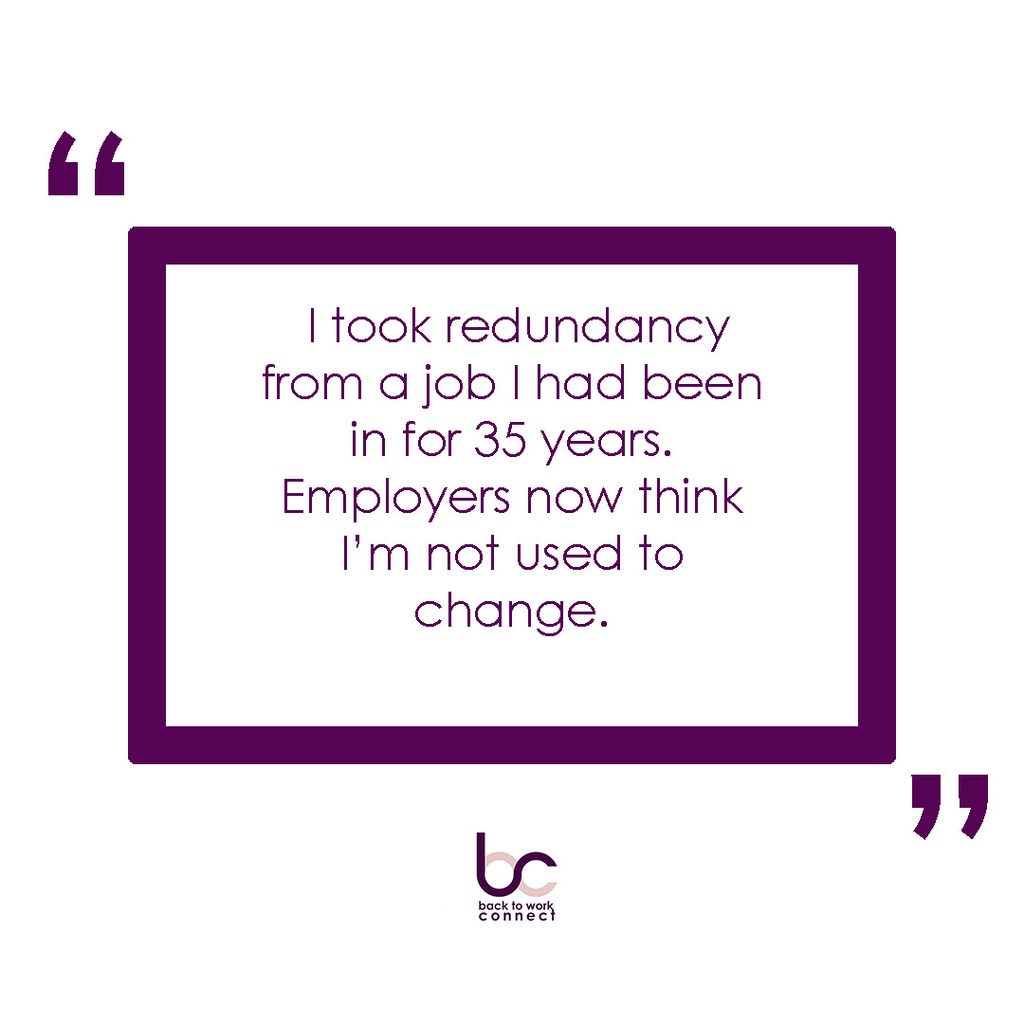
After taking redundancy from a job they’d held for 35 years, one member of our community shared a concern: “Employers now think I’m not used to change.”
First of all, 35 years with one employer is quite an achievement.
You’ve spent a significant part of your working life building experience, developing relationships, learning how an organisation operates and, most likely, adapting to more changes than you can remember.
Yet here you are, looking for your next opportunity and worrying that the very thing that once demonstrated loyalty and commitment might now be working against you.
It’s an understandable concern.
Recruitment has changed. Technology has changed. The way we apply for jobs has changed. And if you haven’t had to look for work in decades, the whole process can feel unfamiliar.
But let’s look at that assumption a little more closely.
Does Long Service Really Mean You’re Resistant to Change?
Think about what the workplace looked like 35 years ago.
In the early 1990s, email wasn’t part of everyday working life for most people. Smartphones didn’t exist. Many workplaces still relied heavily on paper records, fax machines and processes that would look completely outdated today.
Now think about everything that has changed since.
New technologies, computer systems, management structures, regulations, working practices, customer expectations and ways of communicating.
If you’ve worked for the same organisation throughout those changes, chances are you’ve had to adapt repeatedly.
You may have learned new systems, taken on different responsibilities, worked with new managers, helped colleagues through organisational changes or adjusted to entirely new ways of doing your job.
You’ve probably spent 35 years adapting to change. You just haven’t had to change employers to do it.
And that’s an important distinction.
But Could Employers See Long Service Differently?
Yes, some might.
An employer looking at a CV showing 35 years with one organisation may wonder how easily that person would adjust to a different working environment.
They might question whether the candidate has experience outside one company’s systems or processes.
That doesn’t mean they’re right to make those assumptions, but it does mean you have an opportunity to address them.
And this is where how you present your experience becomes important.
Rather than hoping an employer will recognise your adaptability, give them examples that demonstrate it.
1. Don’t Just Tell Employers You’ve Worked Somewhere for 35 Years
Imagine two candidates describing their experience.
The first says:
“I worked for the same company for 35 years and have extensive experience in administration.”
The second says:
“During my 35 years with the organisation, I worked through several major changes, including the introduction of new systems, restructuring of departments and changes in how we delivered our services. I regularly adapted my responsibilities and learned new processes to support the business.”
Which gives you a clearer picture of the person’s ability to adapt?
The second description doesn’t hide the length of service. It puts it into context.
Of course, only include changes you’ve genuinely experienced. But take time to think about what your working life actually involved.
Were you doing exactly the same job, in exactly the same way, for all 35 years?
Probably not.
2. Look for the Changes You’ve Already Navigated
One useful exercise is to divide your career into different periods.
Think about your first few years, the middle of your career and your most recent role.
Ask yourself:
What changed about my job over those years?
What new systems or technologies did I learn?
Did I take on additional responsibilities?
Did I work through restructures or changes in management?
Did I have to learn new regulations, procedures or ways of working?
Did I help train or support new colleagues?
What problems did I have to solve when things changed?
You may find that your career has involved far more change than you initially realised.
The aim isn’t to prove that every year was professionally groundbreaking. It’s to identify real examples of how you’ve adapted when circumstances changed.
Those examples are valuable when writing your CV and preparing for interviews.
3. Focus on Your Skills, Not Just Your Years of Service
Long service tells an employer how long you worked somewhere.
It doesn’t automatically tell them what you’re capable of doing.
That’s why it’s important to look beyond your job title and identify the skills you’ve developed.
For example, you might bring:
Problem-solving: Finding solutions when processes, systems or circumstances changed.
Communication: Working with different teams, managers, customers or suppliers.
Organisation: Managing competing priorities and keeping work on track.
Adaptability: Learning new ways of working as the organisation evolved.
Relationship building: Developing and maintaining professional relationships over time.
Training and mentoring: Sharing your knowledge and helping others develop.
These are transferable skills.
They don’t belong to one employer or one industry.
And they’re worth highlighting when exploring opportunities elsewhere.
4. Be Prepared to Talk About Change at Interview
If you’ve spent most of your career with one employer, you may be asked how you’d adjust to a new organisation.
Rather than seeing this as a criticism, treat it as an opportunity to share your experience.
For example:
“Although I’ve worked for the same organisation for 35 years, the business changed enormously during that time. I’ve had to learn new systems, adapt to different management styles and take on new responsibilities. I’m very aware that moving to a new organisation will involve learning different processes, but that’s something I’ve done throughout my career.”
It’s a straightforward answer.
You’re not pretending that moving to a new employer will be exactly the same as changing roles internally.
You’re simply showing that you understand the challenge and have relevant experience to draw on.
If you can, follow this with a specific example of a change you successfully managed.
5. Recognise That Job Searching Has Changed Too
There’s another part of this experience that’s worth acknowledging.
If you haven’t applied for a job in 35 years, you may find today’s recruitment process surprisingly difficult.
Online application forms, applicant tracking systems, competency-based interviews, LinkedIn profiles and automated communications can make the process feel very different from what you remember.
And that’s before you even get to the job description!
But being unfamiliar with today’s recruitment process is not the same as being unable to adapt to a new job.
They’re two different things.
You may need some support updating your CV, understanding how online applications work or preparing for modern interviews.
That’s not a reflection of your professional ability. It’s simply a process you haven’t needed to use for a long time.
Give yourself time to learn how it works.
And don’t be afraid to ask for help.
6. You Don’t Have to Start at the Bottom Again
One concern people sometimes have after redundancy is that moving to a new employer means starting all over again.
But your experience doesn’t disappear when you leave an organisation.
You may need to learn new systems, understand a different company culture and build new relationships.
Everyone does when they start somewhere new.
What you bring with you is the judgement, knowledge, problem-solving ability and experience you’ve developed over your working life.
Depending on the role, some of your skills may transfer directly. Others may need updating, and you might decide to explore something completely different.
The important thing is to understand what you bring and where it could be valuable.
You’re starting with 35 years of experience, not starting from zero.
7. And What If You Actually Want Something Different?
After 35 years with one employer, redundancy can be an opportunity to reconsider what you want from the next stage of your working life.
That doesn’t mean you have to reinvent yourself.
But it might be worth asking:
Do I want to do the same type of work again?
Would I enjoy using my skills in a different industry?
Do I want the same level of responsibility?
Would more flexibility or fewer hours suit me better?
Are there opportunities I’ve never considered because I was happy where I was?
You don’t have to have all the answers immediately.
And you don’t have to rush into the first opportunity simply because it’s familiar.
Take some time to explore what might work for you now.
A Final Thought
Thirty-five years with one employer doesn’t automatically make someone resistant to change, just as moving jobs every few years doesn’t automatically make someone adaptable.
What matters is how you’ve responded to change, what you’ve learned and what you can bring to your next role.
Some employers may make assumptions about long service. We shouldn’t pretend otherwise.
But you don’t have to accept those assumptions as a reflection of your ability.
Look back over your career. Identify the changes you’ve navigated. Recognise the skills you’ve developed. And learn how to communicate those experiences to potential employers.
You may discover that your career tells a very different story from the one you’re worried employers are seeing.
Thirty-five years with one employer doesn’t mean you’ve stood still for 35 years.
And that’s a story worth telling.
Need Help Identifying Your Transferable Skills?
Our Back to Work Roadmap includes practical resources to help you recognise your skills, build confidence and prepare for your next career move.
Start with our Discover Your Skills Workbook to identify your strengths and find examples of how you’ve used them.
Because the next chapter of your working life doesn’t have to look like the last one.
Keep up to date with the latest Returner Friendly employers, upskilling & retraining opportunities by joining our platform HERE
Sign up to our newsletter & job alert today and never miss the ideal opportunity again! Sign up HERE